Base Engine or Turbo: How Towing Capacity Changes on the 2026 Subaru Outback
September 17 2026,
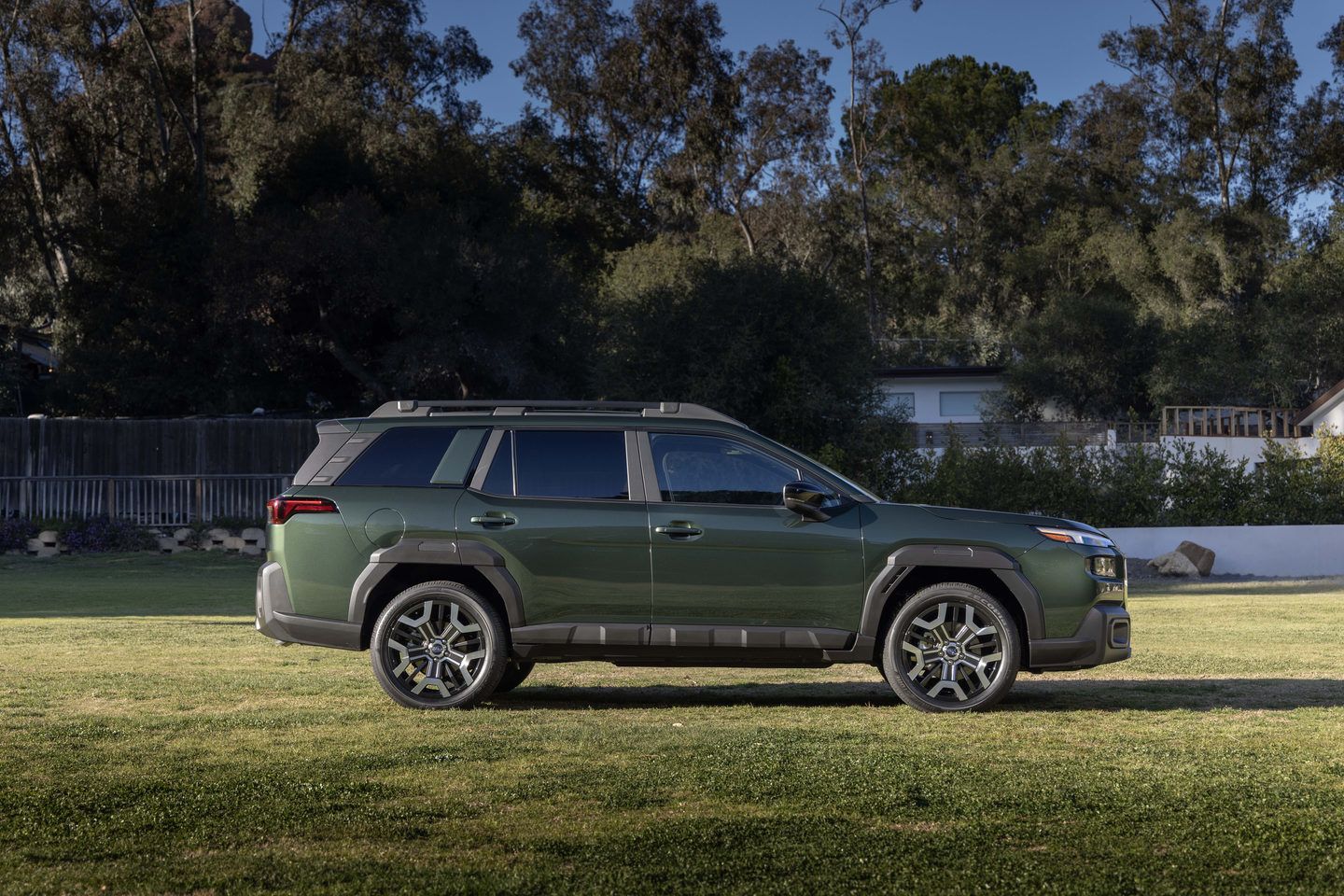
Fall is trailer season across Ontario: boats coming out of the water, camper trailers heading home, utility trailers loaded with firewood and closing-up gear. If towing is part of your Outback ownership plan, the engine you choose matters more than the trim badge on the tailgate.
The 2026 Outback splits into two towing paths. The Touring trim runs the base 2.5-litre engine, while the Limited XT, Wilderness, and Premier XT trims step up to the 2.4-litre turbocharged engine. The difference isn’t just horsepower on a spec sheet; it changes how much trailer you can confidently put behind the SUV.
Base Engine vs Turbo: The Numbers That Matter for Towing
|
Spec |
Touring (2.5L base) |
Limited XT / Premier XT / Wilderness (2.4L turbo) |
|---|---|---|
|
Horsepower |
180 hp |
260 hp |
|
Torque |
178 lb-ft |
277 lb-ft |
|
Max towing |
2,698 lbs (1,224 kg) |
up to 3,500 lbs (1,588 kg) |
|
Fuel economy, city |
9.3 L/100 km |
11 to 11.3 L/100 km |
|
Fuel economy, highway |
7.5 L/100 km |
8.3 to 8.8 L/100 km |
|
Transmission |
Lineartronic CVT |
High-torque Lineartronic CVT with 8-speed manual mode |
The gap in towing capacity, roughly 800 lbs (360 kg), traces directly back to torque. The turbo’s 277 lb-ft arrives well below redline, giving it more pulling force before the transmission has to work hard. The base engine’s 178 lb-ft is enough for light loads, but a heavier trailer will ask more of it on a grade.
Power and Towing Margin
The base 2.5-litre engine suits occasional towing: a small utility trailer, a couple of kayaks, a modest single-axle camper. It’s the right fit for families and cottagers who tow a few times a season and don’t need reserve power for hills or highway merges with a load behind them.
The turbo engine exists for a different kind of buyer. Its 260 hp and 277 lb-ft give it real margin under a loaded trailer, whether that’s a larger camper, a boat and trailer combination, or a snowmobile package. That margin matters most on Ontario’s rolling highway grades, where a straining engine under load becomes a stressful merge rather than a routine one.
‘Enough’ towing capacity depends on your trailer’s actual weight, not just its class. A trailer that’s near the base engine’s 2,698 lbs (1,224 kg) limit leaves little cushion for cargo, water in the tank, or gear loaded aboard. The turbo’s higher ceiling builds that cushion in from the start.
Everyday Driving Character

Away from towing duty, the two engines feel different day to day. The 2.5-litre is the quieter, more relaxed commuter, and its fuel economy numbers reflect that lighter workload. The 2.4-litre turbo responds with noticeably stronger acceleration off the line and passing power, at the cost of higher city and highway fuel consumption.
A fuel-minded shopper who tows only a handful of weekends a year may still want some towing ability without paying for it in daily fuel bills. For that buyer, the base engine’s 2,698 lbs (1,224 kg) rating covers light-duty use while keeping commuting costs down. Choosing the turbo instead is as much a shift in ownership mindset as a horsepower upgrade: more capability on standby, used or not, every week.
Stability and Control Behind a Trailer
Towing confidence isn’t only about the engine. All 2026 Outback trims run Subaru Symmetrical Full-time All-Wheel Drive, and adaptive cruise control, lane centring assist, and emergency lane keep assist are standard across the lineup, which helps keep a loaded SUV tracking straight on the highway.
X-MODE, standard on Touring, Limited XT, and Premier XT, adds traction management for slippery boat ramps and gravel cottage roads. The Wilderness trim goes further with its enhanced dual-function X-MODE and electronically controlled dampers, tuned to keep the SUV settled when the terrain gets rough with a trailer attached. Ground clearance also shifts by trim: 220 mm on Touring, Limited XT, and Premier XT, versus 240 mm on Wilderness, useful for uneven boat launches and cottage laneways.
Matching the Powertrain to Your Trailer
The right engine comes down to three questions: what you’re towing, how often, and what terrain you’ll cross while doing it. A single-axle utility trailer towed a few times a summer doesn’t need the turbo’s extra torque. A larger camper, a boat towed regularly, or frequent highway trips with a loaded trailer are where the turbo’s 3,500 lbs (1,588 kg) ceiling and 277 lb-ft earn their keep.
Think about it in terms of trailer confidence rather than acceleration numbers. If merging onto the highway with a loaded trailer behind the base engine sounds stressful, the turbo’s added margin removes that worry before it starts. For frequent towing, it’s the safer shortlist choice.
Before deciding, confirm your trailer’s actual loaded weight, the hitch and wiring setup you’ll need, and how that pairs with the trim you’re considering. Equipment varies by trim, and getting the fit right up front avoids surprises later.
Talk Towing With Subaru of Maple
The 2026 Outback’s base and turbo engines serve two different towing realities: light, occasional hauling versus regular, heavier trailer use. Both share the same AWD system and standard driver-assist features, so the engine choice is really about your trailer, not your comfort behind the wheel.
Visit Subaru of Maple in Vaughan to walk through your specific towing setup with the team and book a test drive in the Outback trim that matches it.