The 2026 Subaru Outback Wilderness Explained: What the Trail-Focused Trim Adds
October 02 2026,
Shopping the 2026 Outback lineup in Ontario usually comes down to one question: do you need the trail-ready version, or will a road-focused trim cover your driving? The Wilderness sits apart from Touring, Limited XT, and Premier XT with hardware changes built around rougher terrain, not just badges.
This breakdown covers what actually changes on the Wilderness, how those changes work, and whether they match the way you drive.
What the Wilderness Trim Actually Is
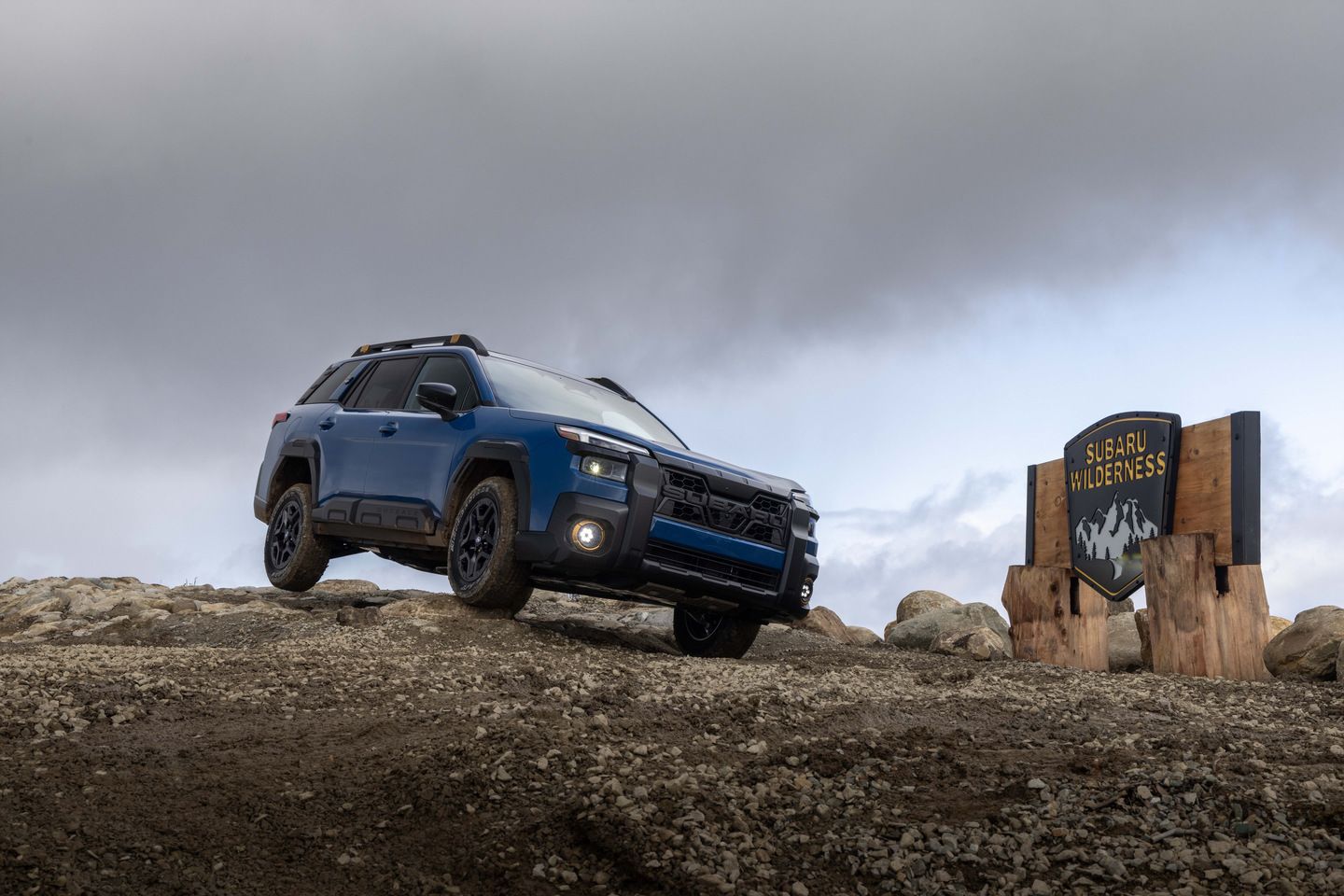
The 2026 Outback Wilderness is the most off-road-oriented trim in the lineup. It shares its cabin architecture and safety systems with the rest of the Outback range, but swaps in a different suspension tune, a taller stance, all-terrain tires, and exterior protection the other trims skip entirely.
It uses the same 2.4-litre turbocharged Boxer engine offered on Limited XT and Premier XT, producing 260 hp and 277 lb-ft of torque. Touring runs a 2.5-litre naturally aspirated Boxer engine instead, rated at 180 hp and 178 lb-ft. Both engines run on 87 AKI regular fuel, so stepping up to the turbocharged Wilderness doesn’t change what you put in the tank.
How the AWD System and Off-Road Hardware Work Together
Every Outback trim uses Subaru’s Symmetrical Full-Time AWD system with an electronically controlled multi-plate transfer clutch at the centre differential, so this part of the system isn’t unique to Wilderness. What is unique is how the Wilderness pairs that AWD with trail-specific hardware.
The Wilderness gets electronically controlled adaptive dampers, not offered on any other Outback trim, tuned to steady the SUV over broken pavement and gravel while keeping ride comfort on paved roads. X-MODE gains a dual-function setup with dedicated Snow/Dirt and Deep Snow/Mud settings, controlled from a steering-wheel switch so you don’t need to look down at speed.
The transmission is a high-torque Lineartronic CVT with an 8-speed manual shift mode and paddle shifters, letting you hold a simulated gear on a steep grade instead of letting the CVT hunt for one.
Why the Extra Ride Height and Geometry Matter
Ground clearance is the clearest functional upgrade: 240 mm on Wilderness versus 220 mm on Touring, Limited XT, and Premier XT. That gap adds up fast on a rutted cottage road or a snow-packed laneway that hasn’t been ploughed.
Approach, breakover, and departure angles are also improved: 20.0°, 21.2°, and 23.6° on Wilderness, versus 18.0°, 19.4°, and 22.5° on the rest of the lineup. In practice, that means less risk of scraping the front bumper cresting a steep driveway or dragging the underbody over a rocky trailhead approach.
The Wilderness also swaps to 17-inch wheels with all-terrain tires (225/65R17), while Touring runs 18-inch all-season tires and Limited XT/Premier XT run 19-inch all-season tires. Smaller-diameter wheels with taller sidewalls absorb impacts on rough or frozen surfaces better than the larger, lower-profile setups on the road-focused trims. A lower front aluminum skid plate and reinforced wheel-arch cladding protect the underbody and body panels from stones and ice chunks kicked up on gravel routes.
Wilderness vs. Touring: Core Differences

|
Spec |
Touring |
Wilderness |
|---|---|---|
|
Engine |
2.5L, 180 hp / 178 lb-ft |
2.4L turbo, 260 hp / 277 lb-ft |
|
Ground clearance |
220 mm |
240 mm |
|
Wheels/tires |
18-in all-season |
17-in all-terrain |
|
Towing |
2,701 lbs (1,225 kg) |
3,500 lbs (1,588 kg) |
|
Suspension |
Standard |
Adaptive electronic dampers |
Towing follows the same split: Wilderness, Limited XT, and Premier XT are rated at 3,500 lbs (1,588 kg) with the turbocharged engine, while Touring’s naturally aspirated setup is rated at 2,701 lbs (1,225 kg). If a small trailer or trio of bikes is part of the plan, that gap is worth noting before you pick a trim.
Cargo, Cabin, and What’s Distinct Inside
Cargo space runs 980 L behind the rear seats across the Outback lineup, so the Wilderness doesn’t add volume, it changes what protects that space. Wilderness-branded all-weather rubber floor mats and a matching cargo tray are standard, and a recycled-material cargo cover doubles as a partition or gear hammock.
Seating surfaces differ by trim rather than by capability level: Touring uses black all-weather soft-touch material, Limited XT uses leather, Premier XT uses genuine Nappa leather, and Wilderness uses its own all-weather soft-touch material with a geometric pattern, built to shrug off wet gear and muddy boots rather than dress up for a boardroom.
On cabin technology, Wilderness and Limited XT share the 12.1-inch touchscreen with cloud navigation, What3words, Subaru Live Traffic, and the 13-speaker Harman Kardon audio system, features Touring doesn’t carry (Touring runs a 6-speaker setup instead). Wilderness pulls ahead of both with a standard 360-degree surround-view monitor, useful for spotting obstacles on a narrow trail or a tight winter parking spot, which Limited XT doesn’t include.
Roof rails carry a raised profile with tie-down points and a 363 kg static load rating, letting the Wilderness haul a rooftop cargo box or kayaks on a road trip without upgrading beyond what’s already fitted.
Who the Wilderness Is Built For
The Wilderness makes sense for drivers who regularly leave paved roads: cottage routes, gravel driveways, unplowed rural laneways, or the odd forest-service road on the way to a trailhead. The extra ride height, protective cladding, and all-terrain tires are working parts, not styling.
Drivers who stick to city streets and highways, and want leather trim or the largest wheels, are better served by Limited XT or Premier XT, both of which share the Wilderness engine without the trail-focused suspension and tire package. Touring covers drivers prioritizing lower running costs and everyday commuting, with better city and highway fuel economy (9.3 / 7.5 L/100 km) than the Wilderness (11.3 / 8.8 L/100 km).
Seeing the 2026 Outback Wilderness in Person
The 2026 Outback Wilderness pairs the turbocharged Boxer engine with taller ride height, all-terrain tires, and adaptive dampers built for gravel, snow, and uneven ground, changes the rest of the Outback lineup doesn’t carry.
Visit Subaru of Maple in Vaughan to walk around the 2026 Outback Wilderness, compare it against Touring, Limited XT, and Premier XT in person, and book a test drive to see how the extra ground clearance feels on the way in.